What Is an ODM Manufacturer?
What is an ODM manufacturer and how does it work? Learn how ODM differs from OEM, the pros and cons, costs, and how to choose the right supplier.

For businesses that want to sell products under their own brand, choosing a manufacturing model is an important decision. Not every business has a team to design products from scratch, the technical infrastructure, or the development budget. This is where the ODM manufacturing model can be worth considering.
ODM is a model in which a manufacturer offers products to other businesses using its existing product designs or its product development capabilities. Depending on the agreement, the buyer can bring the product to market under its own brand or request specific modifications.
So what is an ODM manufacturer, how does it differ from an OEM manufacturer, and how do you find one?
What Is ODM?
ODM is short for "Original Design Manufacturer." It is generally described as a manufacturer that supplies its own original product designs.
In the ODM model, the manufacturer can produce goods using a product design it has developed or its product development infrastructure. The buyer, in turn, can sell the product under its own brand according to the terms agreed upon.
In this model, the manufacturer is more than just a production facility and can also play a role in the design or product development process. However, the scope of design, engineering and customization services is not the same for every ODM manufacturer.
What Does an ODM Manufacturer Do?
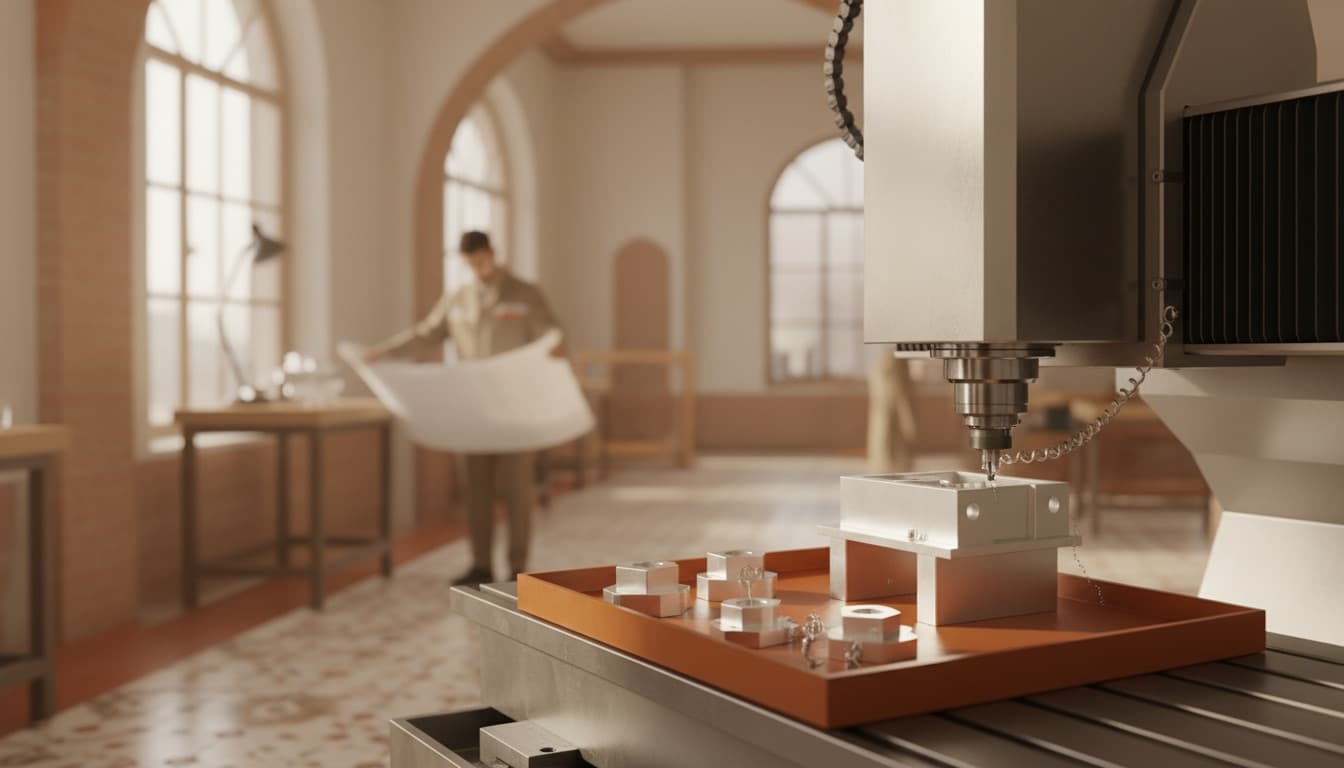
Depending on its sector and the services it offers, an ODM manufacturer can take part in product design, development, production and private-label supply.
The scope of services may include the following stages:
- Offering an existing product design
- Defining product specifications
- Making changes to the design
- Preparing prototypes or samples
- Production and quality control
- Packaging and labeling
- Private-label supply
Some manufacturers only offer ready-made designs, while others can carry out extensive customization based on the customer's requests. For this reason, when requesting a quote, you should find out which changes are possible and what additional costs they involve.
How Does ODM Manufacturing Work?
The ODM manufacturing process generally consists of the following steps.
1. Define the product category and target market
The business decides which product group it will operate in and what its target customers need. The product's price range, functions and quality expectations are clarified at this stage.
2. Research suitable ODM manufacturers
Manufacturers that have existing designs or development capabilities in the desired product category are identified. The manufacturer's experience, product catalog and customization options are reviewed.
3. Evaluate existing products
From among the designs the manufacturer offers, options that fit your needs are shortlisted. Product features, materials, colors, packaging and branding options are discussed.
4. Approve samples and modifications
If possible, request a sample. Assess whether the product meets the targeted quality, functions and brand expectations. Any necessary changes are agreed upon with the manufacturer.
5. Finalize commercial terms
Minimum order quantity, unit price, development costs, lead time and payment plan are determined. The rights to use the design and any exclusivity terms are set out in writing.
6. Production and delivery
Production is carried out according to the approved specifications. Quality control, packaging and delivery are handled under the terms agreed upon.
What Are the Advantages of ODM Manufacturing?
The ODM model can offer several advantages under the right product and business conditions.
It can simplify product development
Using an existing design or development infrastructure can reduce the need to design every component from scratch.
It can support building your own brand
Depending on the agreement, it may be possible to offer an existing product with packaging and labels that match your brand.
It can reduce start-up costs
When part of the design and development work is already done, the initial investment required can decrease. However, costs for tooling (molds), samples, customization and minimum orders may still arise.
It can support market entry
Using ready-made design and production infrastructure can speed up the process in some projects. That said, you should allow enough time for testing, regulatory compliance, customization and sourcing.
What Are the Disadvantages of ODM Manufacturing?
The ODM model may not suit every business. Issues such as product uniqueness, design rights and dependence on the manufacturer should be assessed carefully.
Similarity to competing products: The same or a similar design may also be offered to other buyers. Find out which changes are possible to differentiate your product.
Limits on customization: Not every kind of change may be possible on the manufacturer's existing design.
Design rights: Who owns the product design and in which markets it can be used depends on the contract.
Minimum order quantity: Some manufacturers may require high order volumes.
Quality and compliance responsibilities: The product's compliance with standards and regulations in the target market must be checked separately.
Clarifying these points before placing an order can reduce disputes that might arise later.
What Is the Difference Between ODM and OEM?
The terms ODM and OEM are often used together in the manufacturing industry. However, there is a general distinction between the two models.
In the ODM model, the manufacturer mostly contributes to the product's design or development as well. In the OEM model, the technical requirements of the product can be set by the buyer, and the manufacturer can produce according to those requirements.
| Criterion | ODM | OEM |
|---|---|---|
| Source of the design | Usually the manufacturer's existing design or development infrastructure | Often a design or technical specification defined by the buyer |
| Manufacturer's role | Can offer design and production | May focus mainly on production and meeting technical requirements |
| Customization | Depends on the model offered and the agreement | Depends on the technical specification and production capacity |
| Brand use | The buyer's brand can be used, depending on the agreement | The buyer's brand can be used, depending on the agreement |
| Design rights | Should be clearly defined in the contract | Should be clearly defined in the contract |
This table provides a general framework. Because the use of the terms OEM and ODM can vary by industry, review the scope of services and the contract terms rather than relying only on the name given to the model.
How Do You Find an ODM Manufacturer?
When looking for an ODM manufacturer, first define your product category, your target price range and the level of customization you need.
Then you can follow these steps:
- Clarify the product category: Decide which product group you will sell in.
- Review manufacturer portfolios: Research their existing product designs and production capabilities.
- Ask about customization options: Find out whether changes to the logo, packaging, color, materials and technical features are possible.
- Request samples: Check the product's quality and functions.
- Compare costs: Consider unit price, minimum order, sample costs and customization costs together.
- Clarify rights and responsibilities: Put design use, exclusivity, quality and regulatory terms in writing.
On Uretico, you can try discovering relevant manufacturers by using a product name or a product photo. The Production Map can also help you explore manufacturing regions in Türkiye. However, you should directly verify whether a company offers ODM services and whether it is suitable for your product.
What Should You Look for When Choosing an ODM Manufacturer?
When choosing a manufacturer, consider not only price but also the requirements of your product and business model.
- Experience in the product category
- Quality of existing designs
- Customization options
- Minimum order quantity
- Sample and development costs
- Production capacity and lead time
- Design and brand usage rights
- Quality control and compliance certificates
- After-sales support and defective-product procedure
If product differentiation matters to you, ask specifically what rights the manufacturer holds over the design and whether it can offer the same product to other customers.
Conclusion
An ODM manufacturer is a producer that can offer products to other businesses using its existing designs or product development capabilities. This model can be worth considering for businesses that want to reduce the effort of developing a product from scratch and sell under their own brand.
When choosing an ODM manufacturer, review the product portfolio, request samples, learn the limits of customization, and settle all terms, including design rights, in a contract.
With Uretico, you can research manufacturers that fit your product, explore manufacturing regions in Türkiye, compare your sourcing options, and build new business connections for your own brand.